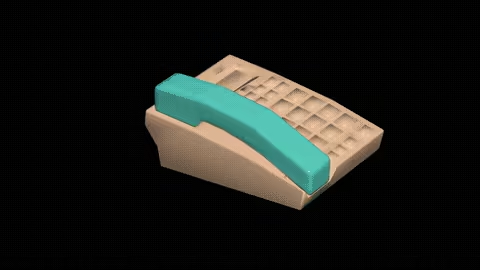
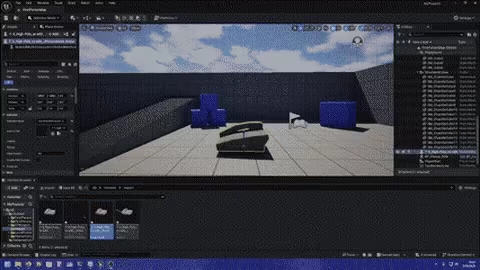
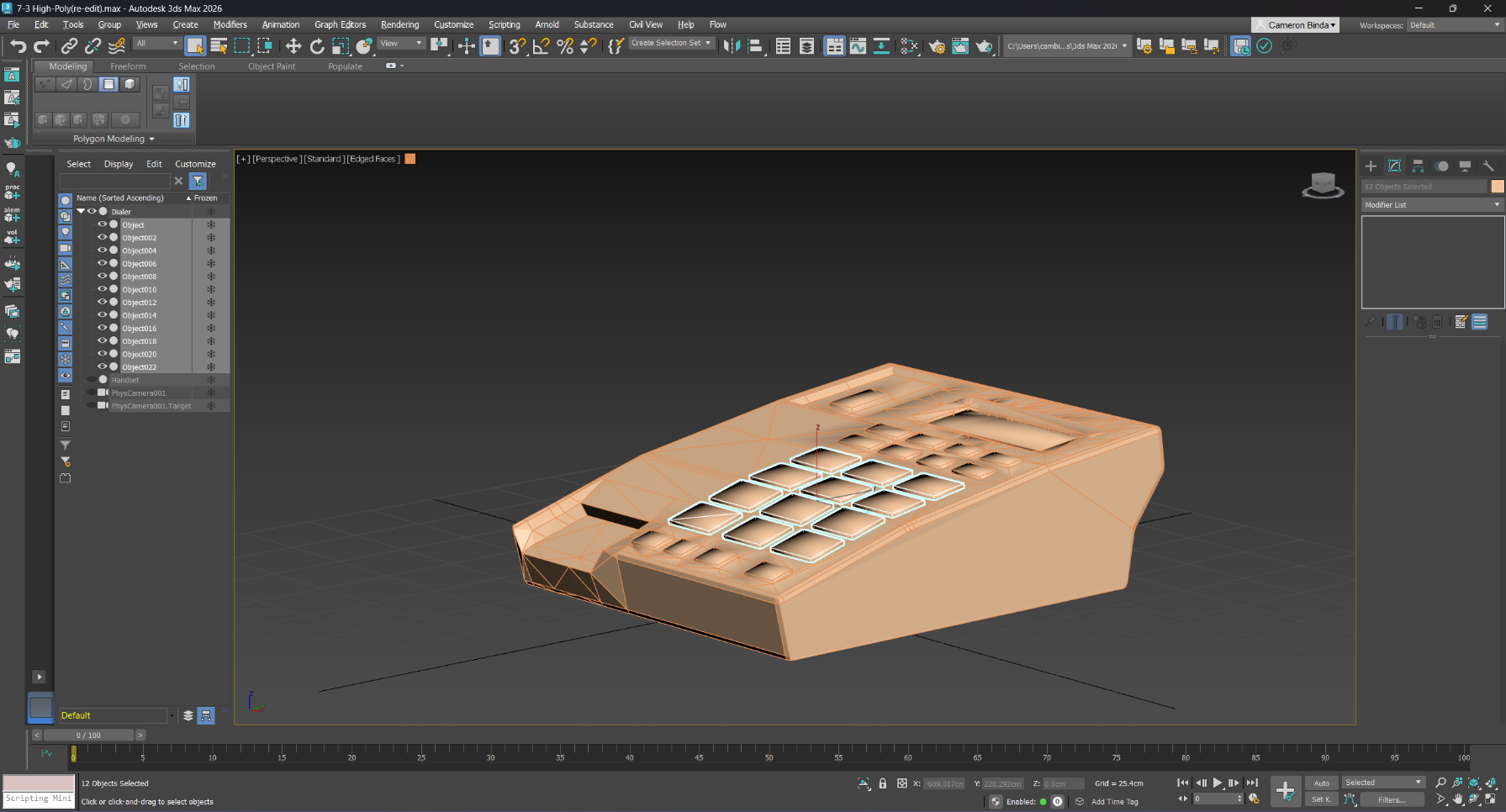
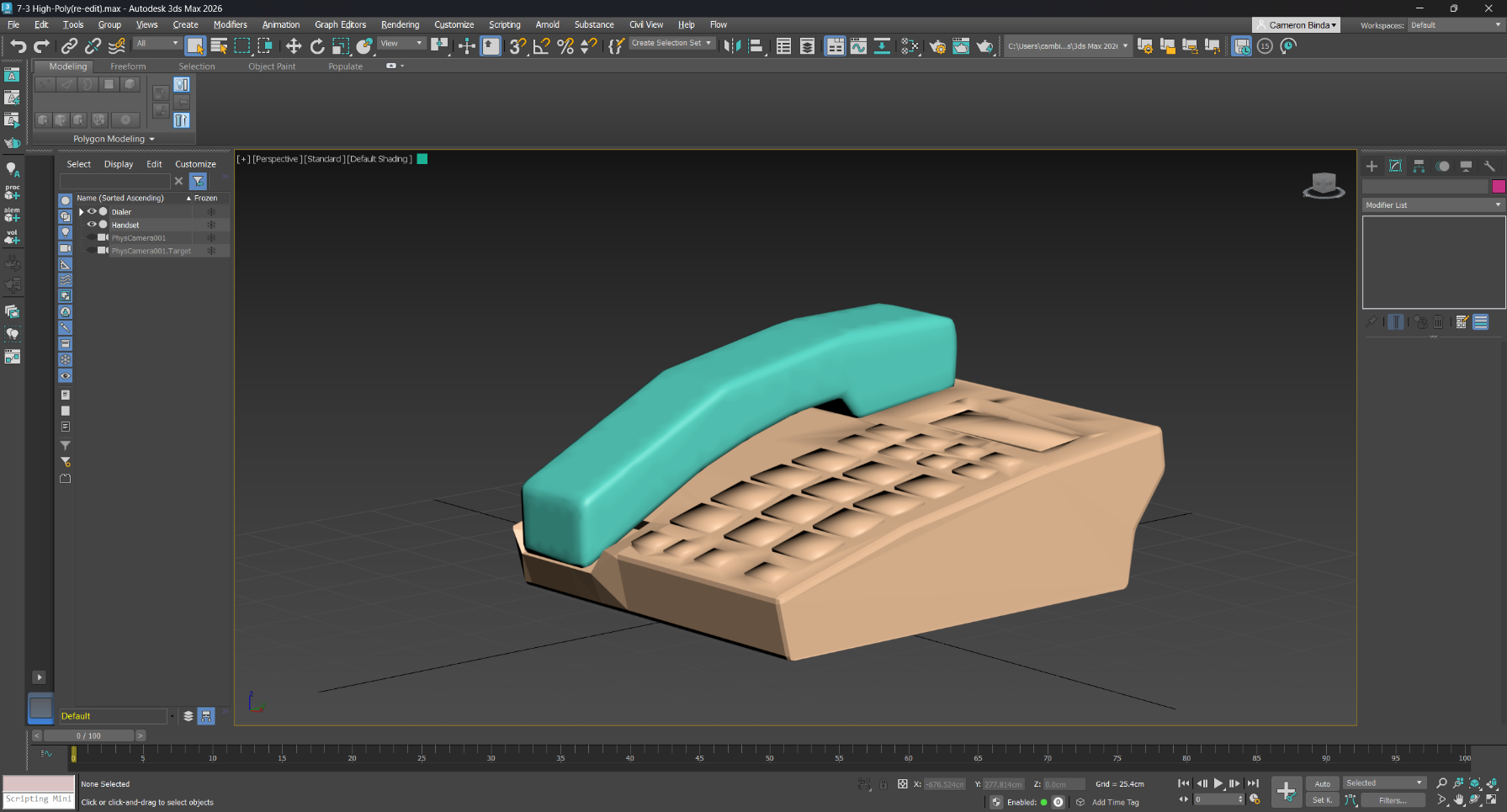
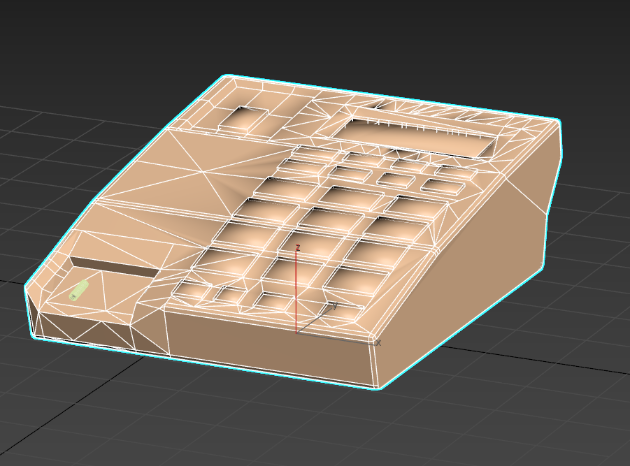
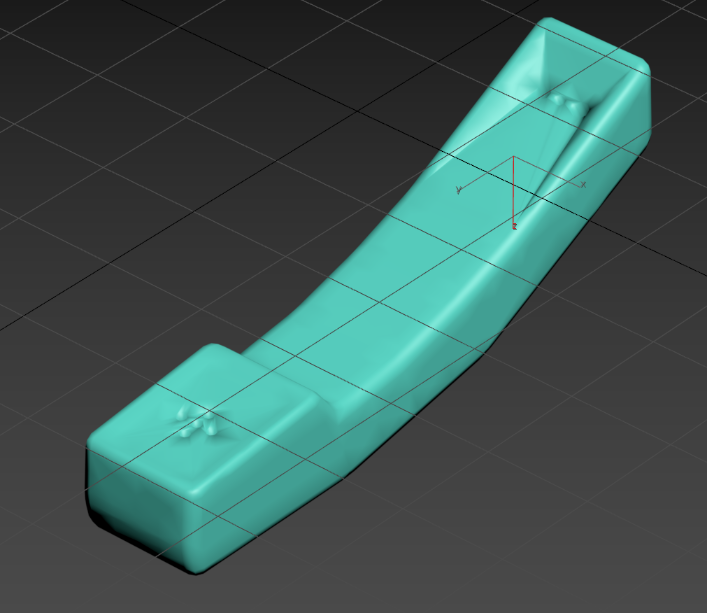
This is a phone model and animation I made for a college course. It was made at the beginning of my college career in 3DS Max. It was then refined and polished for the capstone course of my degree. During the capstone, I also decided it was necessary to be able to import it into a game engine. I found that it was very simple to export and import the project into Unreal Engine. I also used ffmpeg to convert the image sequence to a video. I then used it to convert the video to a GIF for this website. The source files are available here, and all files can be downloaded under Releases on the right.
Reflection
I learned how to model with reference images. I was able to take 2D shapes and create a 3D model. I also learned how to use 3DS Max more efficiently. There are, like other professional software, many shortcuts to save time. I also learned how to import assets into Unreal. I discovered that many softwares can export to .fbx files, and Unreal can import those files. There's also lots of settings to make sure you only import what you need.
The main challenge I faced was cleaning up the model. I needed to get rid of a lot of unnecessary vertices, but I couldn't find an easy way to do that. I decided to manually remove the vertices, and add back some edges to make the faces transition more smoothly. Finally, I learned how to use ffmpeg to convert between image and video file types. I went from an image sequence to a video, and then from a video to a GIF to avoid embedding the video.
The model's main improvement was its animation. It's now much more detailed, and includes movement on the phone buttons. Any button can move, but I have it type 911. The models were also slightly improved. Like I said, I removed a ton of vertices, and the handset now has speaker and microphone holes. I also changed the smoothing on the model.